SHOP SOLUTIONS
QUICK STROKE CHECK

QUICK STROKE CHECK

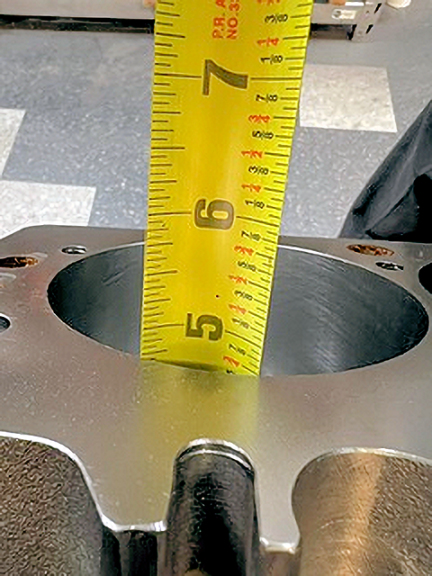
If you’re taking an engine apart and are unsure of the cubic inch or the crank stroke, here is a quick way to figure it out. Simply rotate the engine until one piston is at BDC. Take a measurement from the deck of your block down to the deck of the piston. You can use...

read more
DON’T GET INTO A BIND

DON’T GET INTO A BIND

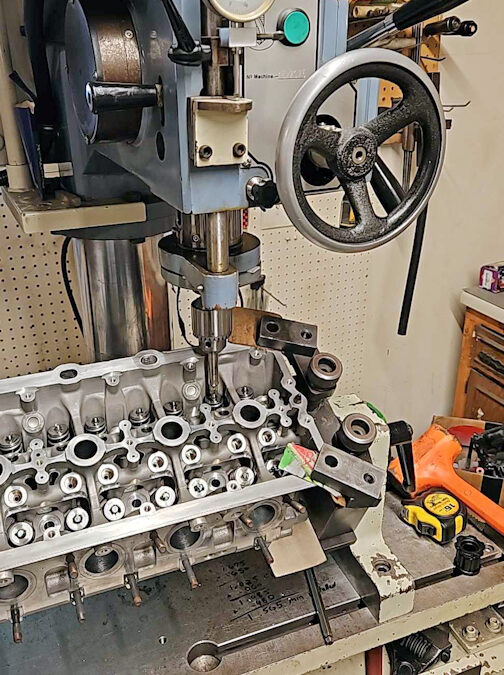
When valve train clearances are going to be tight, I like to double check my measurements and bench calculations by actually testing the components after they're assembled. I put the valves and springs in this head, then used my quill on the seat & guide machine to...

read more
ROD STRAIGHTENING

ROD STRAIGHTENING

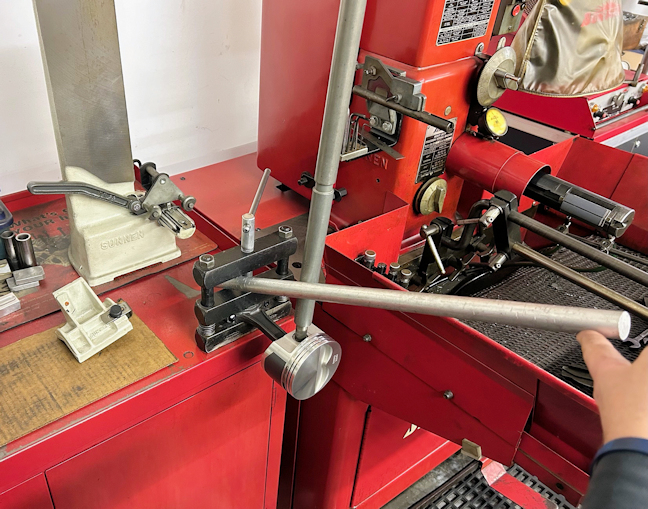
When checking and correcting rod straightness, I use two bars against each other in the rod vice. Since the vice isn’t mounted to the cabinet strong enough for most correction work, this allows you to use it. I feel the two bars gives me a better feel for how much I’m...

read more
RELOCATING TIMING MARKS

RELOCATING TIMING MARKS

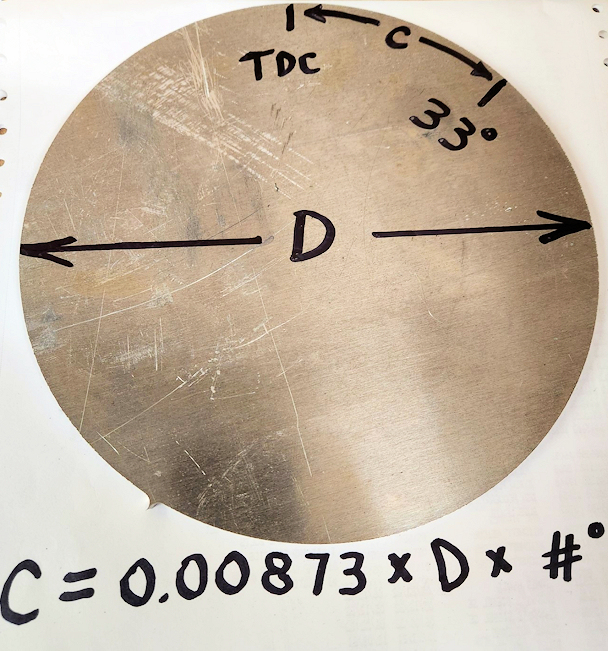
Timing marks on pulleys can be relocated by using the following formula: C = Pulley Diameter x 0.00873 x #° Where: #° = the number of degrees the timing mark is to be moved along the rim of pulley. On pulleys 6" and greater, with moves of 30° or less, a dial caliper...

read more
PNEUMATIC SLEEVE INSTALLER

PNEUMATIC SLEEVE INSTALLER

Instead of hammering sleeves in, I made this fixture out of a small bottle jack, threaded rod, and a steel plate. Once the plate is drilled for different blocks it makes the job super-fast, and my arm isn’t sore from swinging the hammer.

read more
USED-VALVE HOLDERS

USED-VALVE HOLDERS

Since we’re always looking for new and better ways to machine, we often have to make tool holders and other items. Locating the raw material or turning down stock is always part of the process. I’ve found that valve stems often have the same size as much of the...

read more