SHOP SOLUTIONS
STOP FRETTING

STOP FRETTING

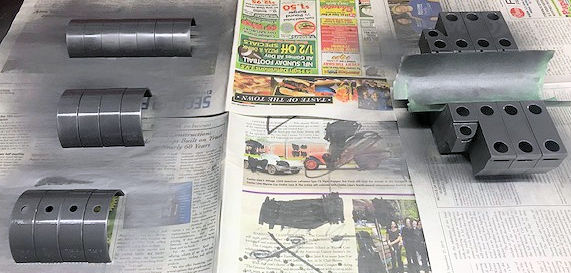
STOP FRETTING If you work on any high-power adder or high rpm engines, chances are you will see some fretting on the bottoms of main caps and the backside of the upper rod bearing. Even when the tune is right you will still see minor signs of movement between the...

read more
LIFTER BORE GO-NOGO

LIFTER BORE GO-NOGO

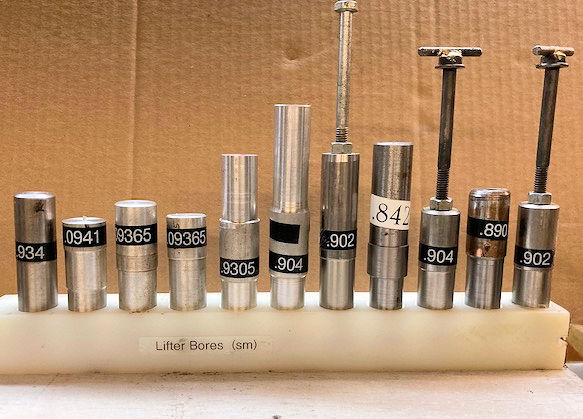
LIFTER BORE GO-NOGO An expedient method of checking and verifying both lifter bore wear and size is with a “go- nogo” gauge. This is not meant to replace the use of a dial bore gauge, just as a quick check. They are easily machined on a lathe. They can be machined...

read more
CRANK TURNING SOCKET

CRANK TURNING SOCKET

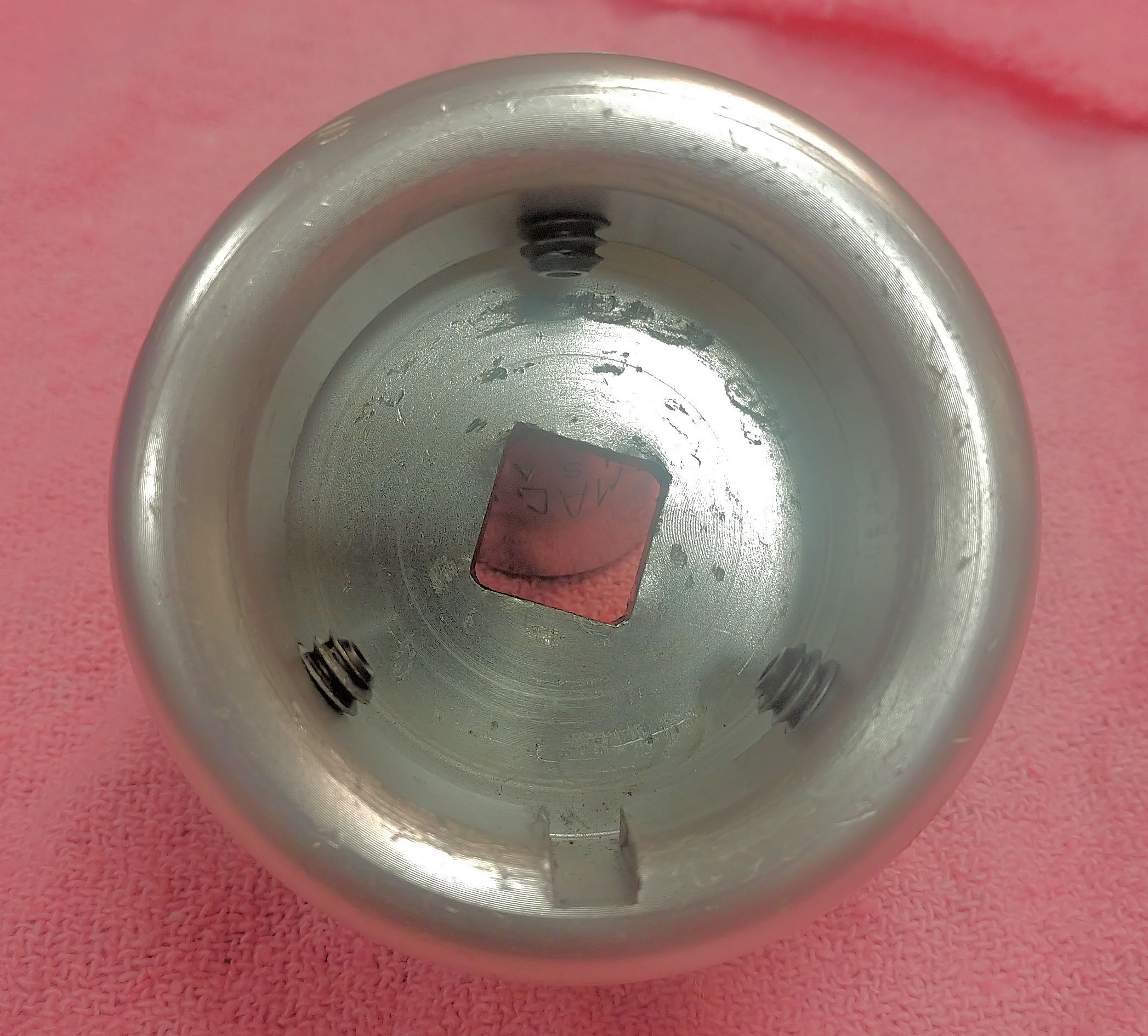
CRANK TURNING SOCKET I took a BB Chev crank socket and drilled and taped (3) ¼”-20 holes for set screws, 120 degrees apart. You can now use it on Mopar, Pontiac or just about any crankshaft with a 3/16” keyway. Paul Pionessa Pionessa Automotive Lancaster NY  February,...

read more
GOOD TO BE FOILED

GOOD TO BE FOILED

GOOD TO BE FOILED Keep a roll of kitchen aluminum foil handy in the shop. It is useful for many things including shimming chuck jaws, wrapping parts to keep shavings out, protecting parts from weld splatter, covering mill or lathe ways when machining abrasive cast...

read more
HIT YOUR MARK

HIT YOUR MARK

HIT YOUR MARK Here is a trick I use when I am boring for sleeves, line boring mains or any other type of boring where I absolutely must to hit my size and tolerance is tight. Prior to removing the tool on your 2nd to last cut, set up a mag base and a tenth indicator....

read more
CONVOLUTED IDEA

CONVOLUTED IDEA

CONVOLUTED IDEA On many spray-wash machines, the "parts tree" will scuff up a freshly surfaced cylinder head if it is allowed to touch it. I simply slide some Convoluted Wire Tube over the branches of the tree and the heads are safe. Sometimes it can be difficult to...

read more