by Donnie Hurt | Jul 1, 2016 | BLOCK WORK
A HOT CUTTER CAM I always like to test fit the camshaft before assembling an engine I have machined. We have all seen camshafts that do not fit well in the cam bearings. Most of us have had to make a “cutter camshaft” by cutting sharp slots in the cam journals of an...
by Donnie Hurt | Jun 1, 2016 | BLOCK WORK
GROWING ALUMINUM We live in a time where aluminum blocks with cast-in sleeves are common. We build several dozen Gen III and Gen IV GM LS type motors per year. We finish our cylinders .001” tighter on the aluminum block engines to compensate for the additional growth...
by Donnie Hurt | Jun 1, 2016 | BLOCK WORK
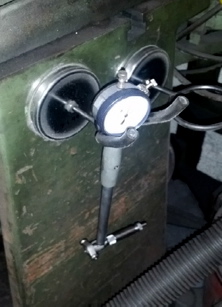
DIAL BORE GAUGE HOLDER Boring Bar Stands don’t have any place for holding your dial bore gauge. I bought a magnetic spay gun holder from a paint and body shop supply store. I stuck it on my stand as you can see in the picture and now that gauge is right where I want...

by Donnie Hurt | Jun 1, 2016 | OTHER SHOP WORK
SMALL DIAMETER DAMPERS It is a common practice to use the early Chevrolet V8 6-1/8” diameter harmonic damper as a light weight performance upgrade to the 6-3/4” and the 8” dampers that come on the later, longer stroke engines. Though no horsepower is to be had by...
by Donnie Hurt | Jun 1, 2016 | BLOCK WORK
REMOVING DRY SLEEVES Removing dry cylinder liners by pressing them out can require a lot of setup time. Using your boring bar, offset the centering with a .030 feeler gauge on one finger. Line up the offset so you can view your cut. Set the bit by letting it slide out...